Contents
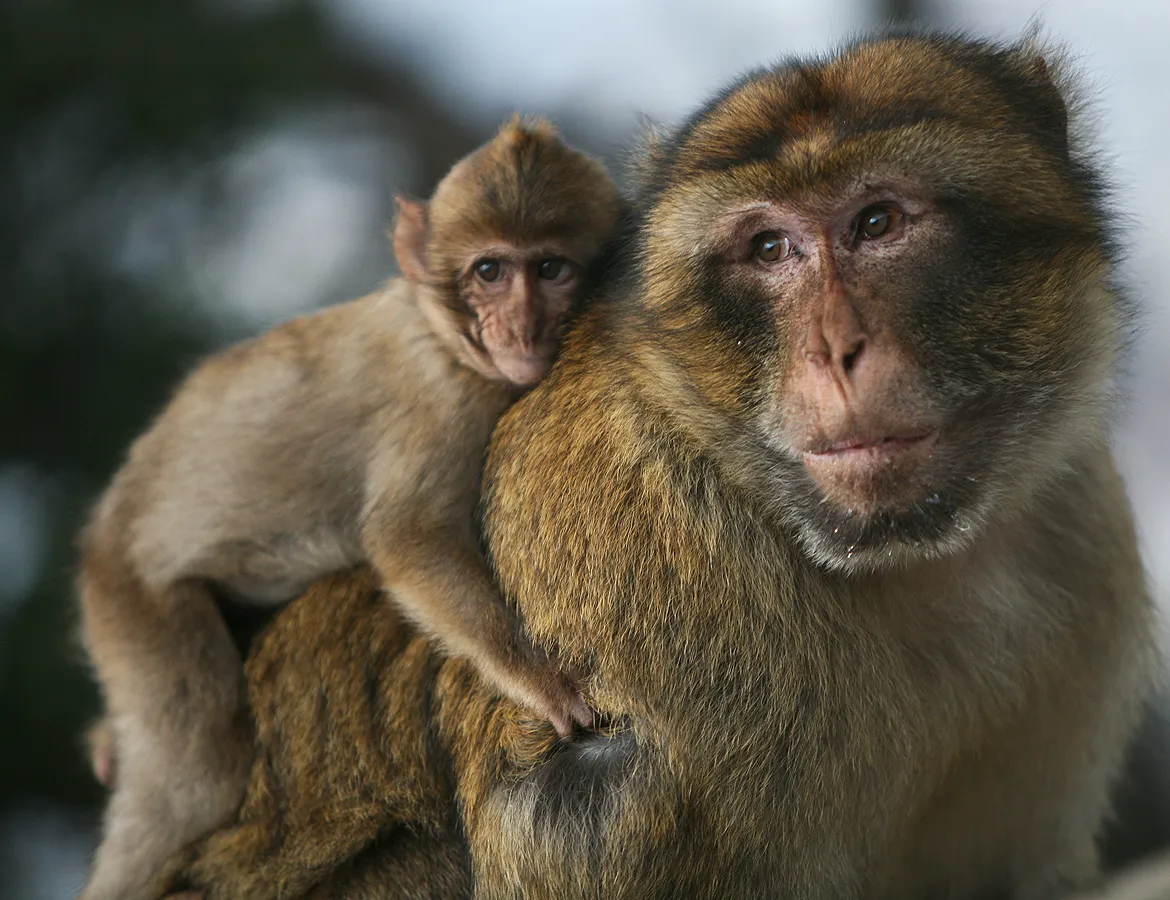
The Barbary macaque, Macaca sylvanus, is a monkey of the Rif, Middle and High Atlas Mountains of Morocco and the Tell Atlas of Algeria, with a separate, introduced population on Gibraltar. It is known as the only macaque to live outside of Asia and the only surviving nonhuman primate in Africa north of the Sahara. Its stub of a tail has led some people to call it the “Barbary ape”1, but it is a monkey.
What does a Barbary macaque look like?
A Barbary macaque has thick fur, yellowish-gray to darker grayish-brown, with a much lighter chest and stomach and a face that is often dark pink. The tail is a stub of 1 to 2 cm, typically more prominent in males. Its front limbs are longer than its hind limbs1, and like all cercopithecids it has large cheek pouches for carrying food2.
Males are larger than females. Animal Diversity Web gives males a weight of 16 kg and a length of 550 to 600 mm, and females about 11 kg and 450 mm. Females in estrus show large anogenital swellings2.
Where do Barbary macaques live?
Most Barbary macaques live in the Middle and High Atlas and the Rif mountains of Morocco; a smaller population lives in the Tellian Atlas of Algeria, restricted there to the Grand Kabylie, the Petit Kabylie and the Chiffa Gorges. On Gibraltar, as of 2011, a population of about 200 was maintained2 by constant reintroduction of new animals. Before the Ice Age the species lived along the Mediterranean coasts and most of Europe1, as far north as Germany and the British Isles.
The species prefers high mountains, cliffs and gorges, up to 2,600 m, but can also be found at sea level. Its primary habitat is cedar forest2; it also lives in mixed cedar and holm-cork oak forest, pure oak forest, shrubby rock outcrops along coasts and occasionally grassland at low elevations. The North African range has hot, dry summers and cold, snowy winters1.
What do Barbary macaques eat?
The Barbary macaque is an omnivore whose diet changes with the seasons. In spring it eats various vegetation and caterpillars that live in oak trees; in summer fruits, small seeds, roots and fungi are plentiful. In autumn it feeds on acorns, and in years of high mast production it may live on acorns for more than half the year. In winter, food on the ground is limited, and it eats the leaves, seeds and bark of evergreens2 in the trees. It also takes insects, lizards and even tadpoles. In Morocco, stripping bark from cedar trees has led to the macaques being regarded as economic pests1.
How do Barbary macaques live?
Barbary macaques are diurnal and do most of their foraging and travelling during the day. They are highly arboreal in winter and more terrestrial in summer. An average troop has 24 individuals but can contain up to 59, with a 1:1 ratio of males to females. Home ranges cover 3.07 to 9.01 km²2 and may overlap with those of other troops by 39% to 100%.
Males and females form their own hierarchies. Female hierarchies are strictly matrilineal, and a newborn daughter takes the position just under her mother, above her older sisters. Males have looser dominance hierarchies2 and show less aggression towards each other. Young males may be evicted from their natal troop1 as they reach puberty and form bachelor groups until they join a new group.
Females show rounded-mouth threats as a sign of aggression and dominance, bared teeth show submission, and lip-smacking and teeth-chattering are signs of appeasement. A loud, high-pitched “ah-ah” call warns the troop of danger; on hearing it when an eagle is spotted, the troop escapes to the lower canopy. Large eagles are the primary predator2, with golden jackals and red foxes less common.
How do Barbary macaques reproduce and how long do they live?
The mating season runs from November to December, and by the end of estrus each female has mated with all or nearly all males in her troop. Gestation lasts 164.2 days on average, and one offspring is usually born between April and June, weighing on average 450 g. The interbirth interval ranges from 13 to 36 months2. AnAge gives a weaning age of 213 days3.
Both sexes reach sexual maturity around 46 months of age, and females have their first offspring around 5 years of age. Because mating is promiscuous, males cannot know which infant is theirs and provide paternal care to infants in their troop2; adult males group around infants to protect them from approaching predators.
In the wild, Barbary macaques typically live 22 years2; males rarely live more than 25 years, and females appear to live slightly longer. In captivity they have been reported to live up to 30 years3.
Is the Barbary macaque endangered?
The IUCN lists the Barbary macaque as Endangered4, under Red List version 2022.2. The New England Primate Conservancy reported in 2023 that its populations are declining, and that the main threats in North Africa are illegal logging and charcoal production and poaching of infants and juveniles for the pet trade or for entertainment in tourist areas. Between 1995 and 2009, roughly 300 infant macaques were captured from the wild each year for the illegal pet trade. Other threats are overgrazing by livestock1, attacks from shepherd dogs, droughts and the effects of tourism.
As of 2011, it was a federally protected species in Morocco and Algeria2. As of 2023 it is listed in Appendix I of CITES. Measures include the creation of Ifrane National Park1 and its management plan, and more control against poaching and illegal trade.
Similar species
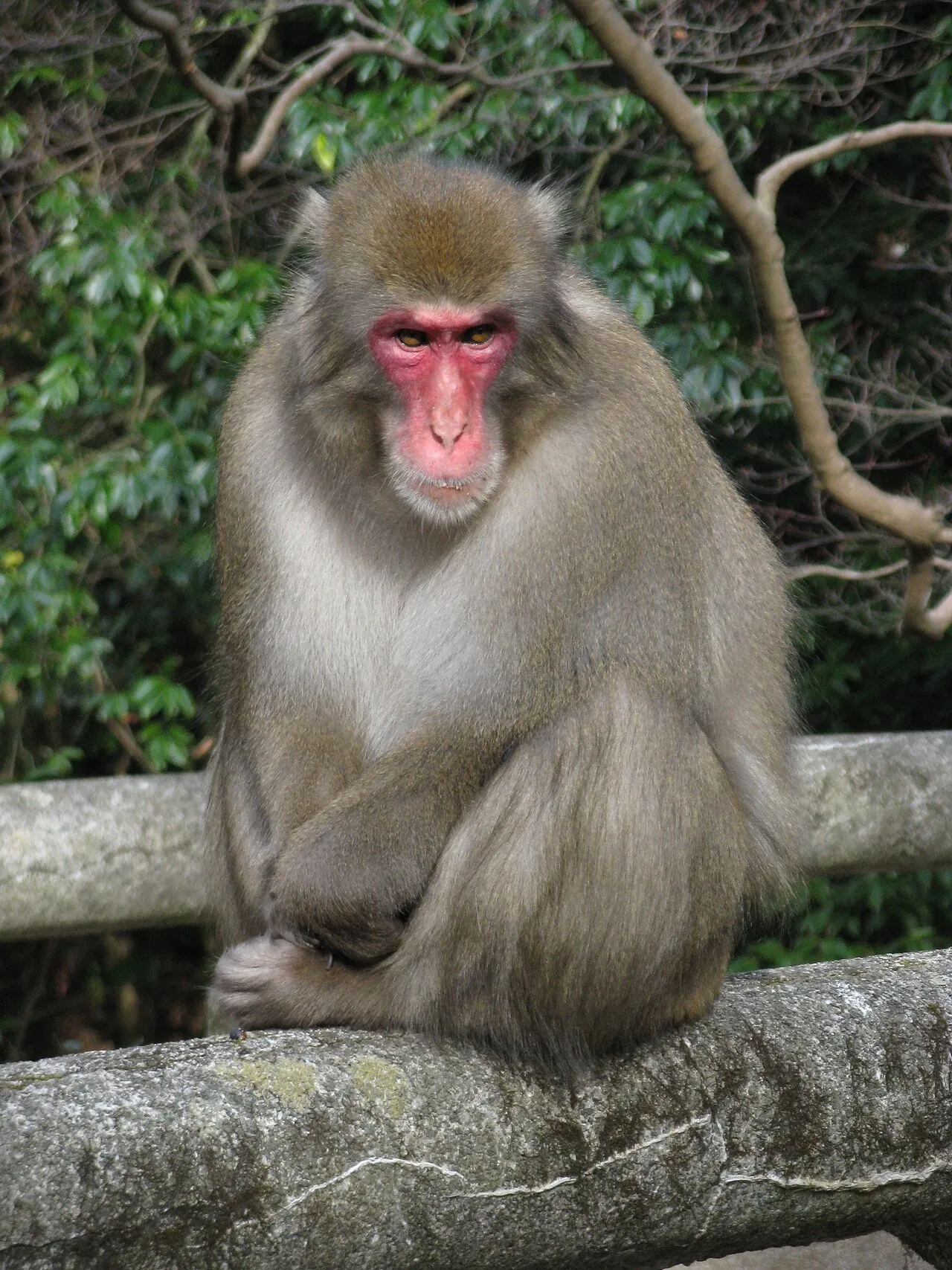
- Japanese macaque (Macaca fuscata): lives on Honshu, Shikoku and Kyushu in Japan. Its tail is a stump no longer than 10 cm5, against the Barbary macaque’s 1 to 2 cm1.
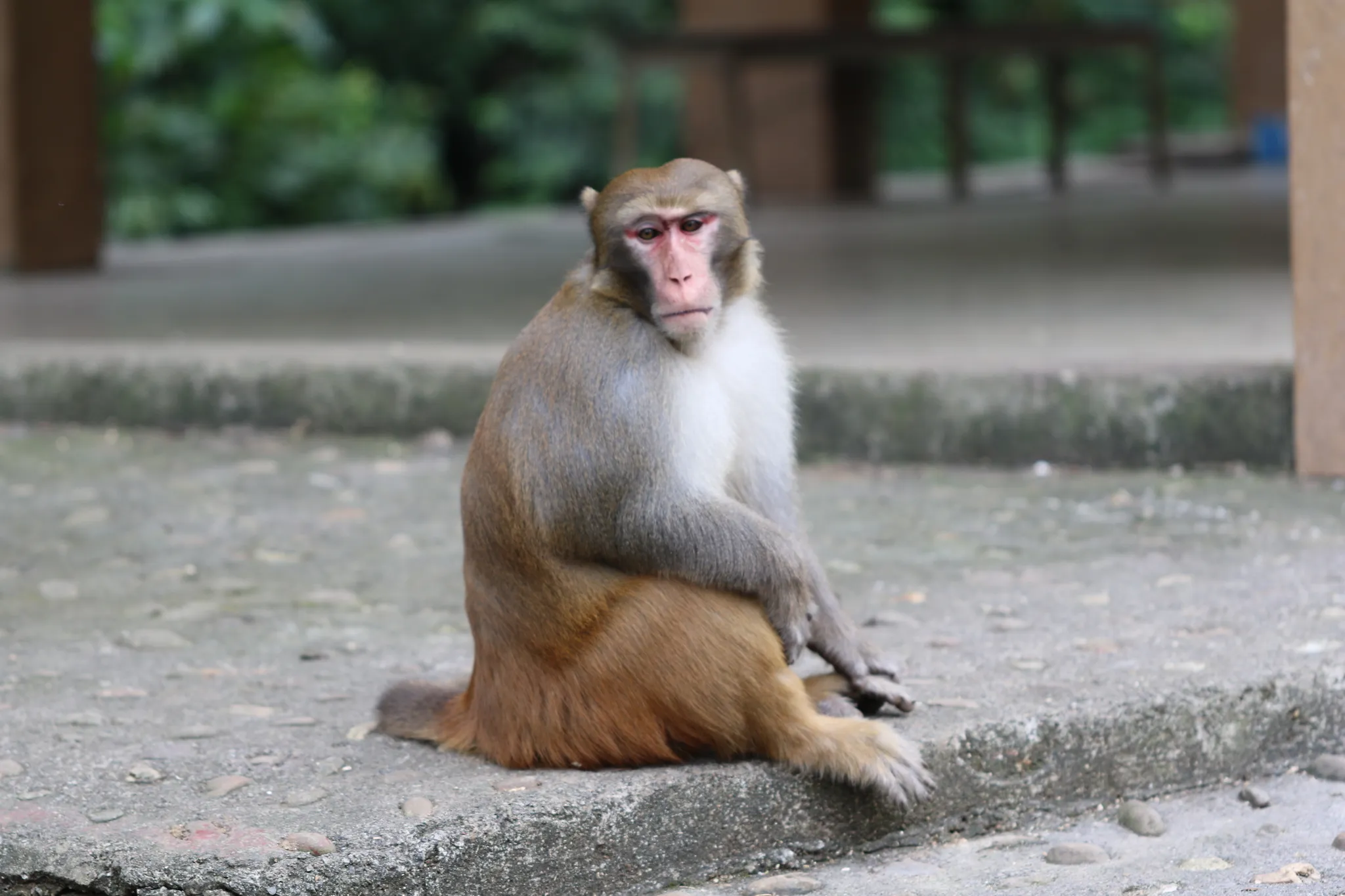
- Rhesus macaque (Macaca mulatta): found from western Afghanistan through India to northern Thailand. Its tail adds 19 to 32 cm to its length, against the Barbary macaque’s 1 to 2 cm stub, and adults have a red face and buttocks6.
__parque_nacional_de_Tarangire__Tanzania__2024-05-24__DD_02_Z1CrXAa.webp)