Contents
The eastern gorilla, Gorilla beringei, is a critically endangered species and the largest living primate. It lives in portions of eastern DRC, Uganda and Rwanda, and has two subspecies: the mountain gorilla (G. b. beringei) and the eastern lowland or Grauer’s gorilla (G. b. graueri). Both were once thought to be subspecies of a single gorilla species, until genetic research justified a separate classification1. Mountain gorillas are the most studied subspecies of gorilla, through more than 30 years of field research; Dian Fossey founded the Karisoke Research Center in the Virunga Volcanoes in 19672.
What does an eastern gorilla look like?
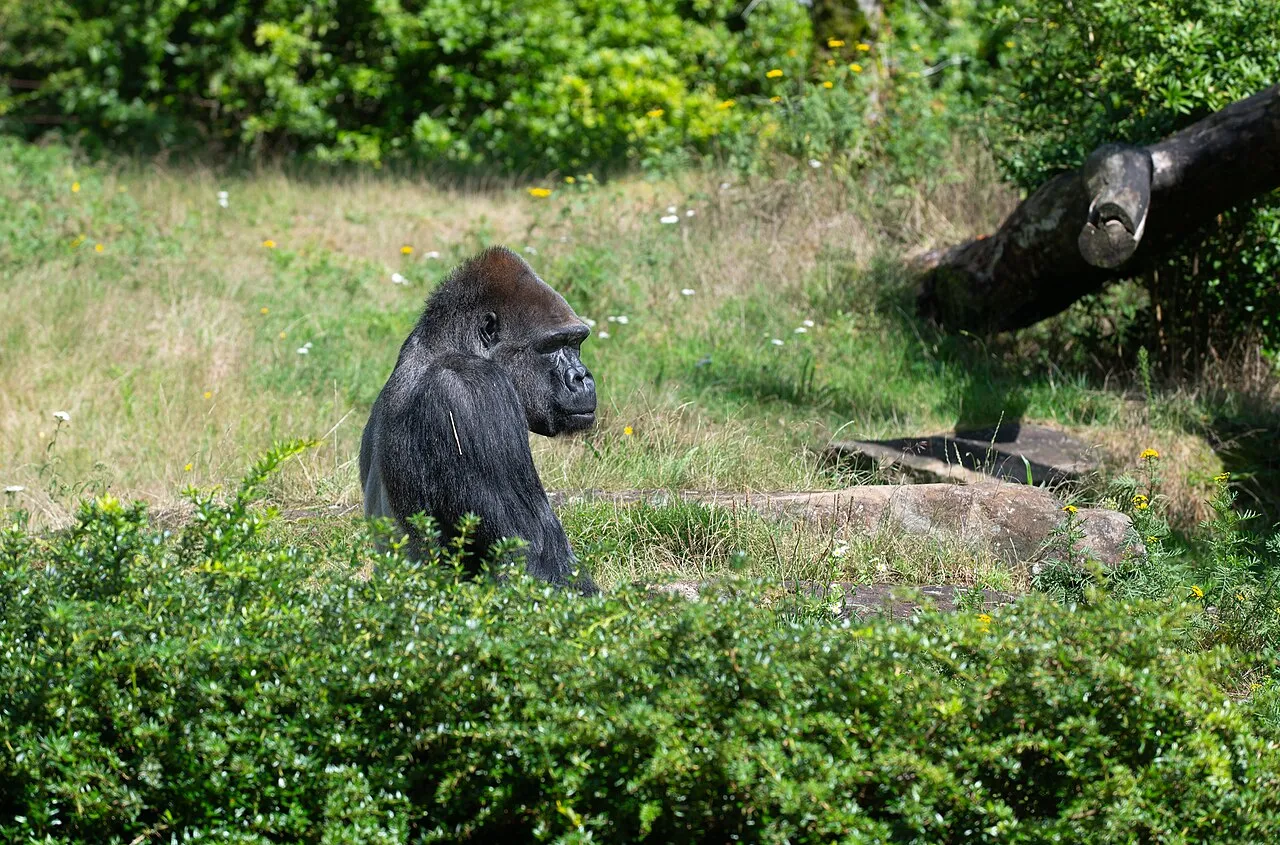
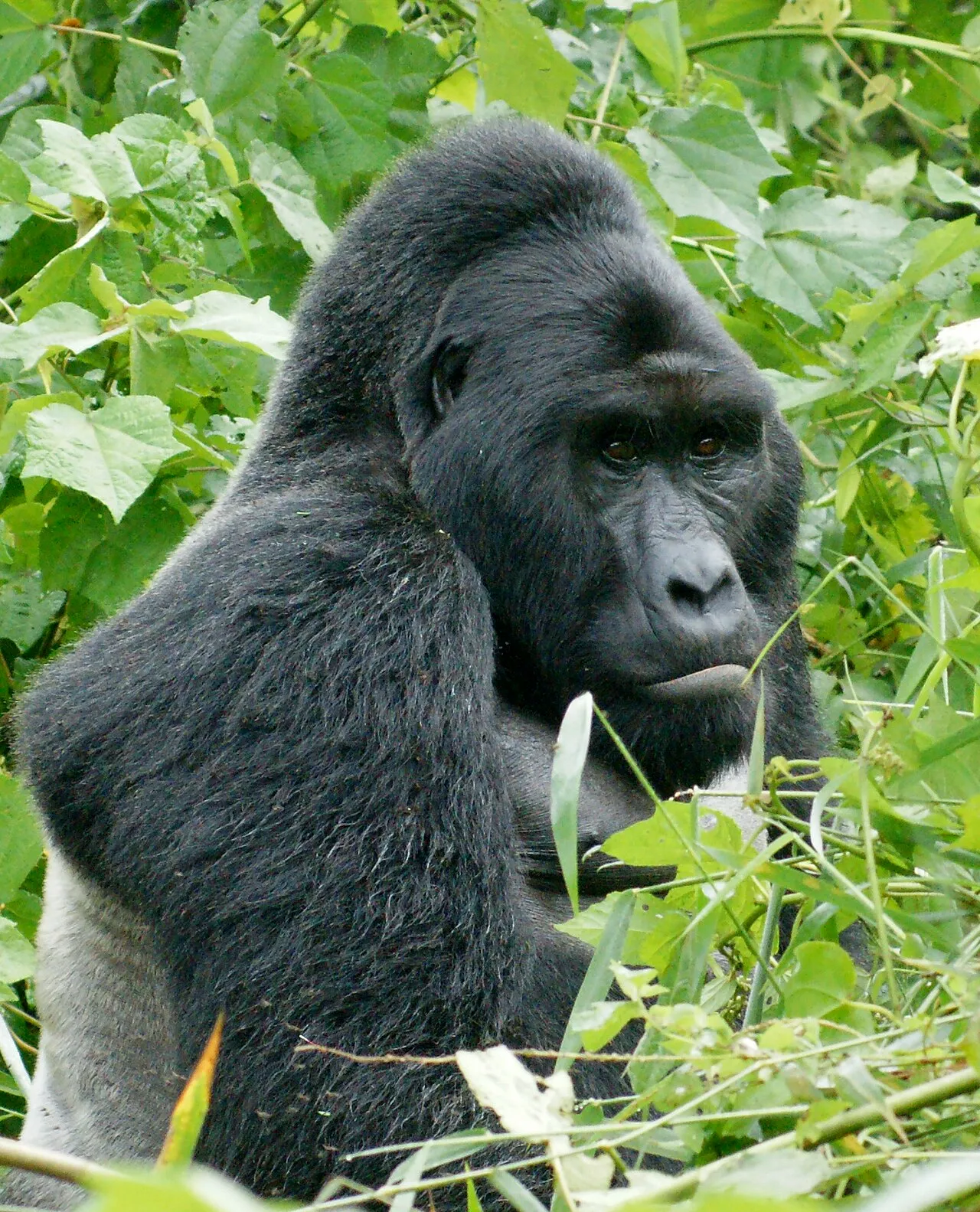
The eastern gorilla has a large head, broad chest and long arms, with a flat nose and large nostrils. Its face, hands, feet and breast are bald, and its fur is mainly black. Adult males carry a silvery “saddle” on the back, which turns white with age; this is why older males are called silverbacks. Grauer’s gorilla has shorter, thicker, deep black fur1, while the mountain gorilla’s is more bluish. Mountain gorillas differ from other gorillas in having longer hair, larger jaws and teeth, a smaller nose and shorter arms3.
Males are much larger than females. A full-grown male typically weighs 140 to 205.5 kg and stands 1.7 m upright, and a female weighs 90 to 100 kg and stands 1.5 m. Primate Info Net, writing about gorillas in general, gives males up to 181 kg in the wild and 227 kg in captivity2, and females 72 to 98 kg. Animal Diversity Web puts females at 70 to 114 kg, with males averaging 160 kg. The tallest silverback on record stood 1.95 m and was shot in northern Kivu in May 19381. Mature males also have glands in their armpits that give off a strong odour when the animal is under stress3.
Where do eastern gorillas live?
Eastern gorillas occupy an area of approximately 112,000 km² in eastern DRC, Uganda and Rwanda. Mountain gorillas are restricted to two places: the Virunga Volcanoes, where the borders of Uganda, Rwanda and DRC meet, and Bwindi Impenetrable National Park in Uganda. Grauer’s gorillas occur across the forests of the Albertine Rift in eastern DRC1. Western and eastern gorillas are separated by about 750 km2.
The species lives in submontane and montane forests from 650 to 4,000 m. Mountain gorillas live highest, at 2,200 to 4,000 m in the Virunga Volcanoes, where temperatures range between 3.9 °C and 14.5 °C, though they may reach 25.8 °C. They sometimes enter the afro-alpine meadows at 4,000 m3, where nights are below freezing and there is little suitable food. Grauer’s gorillas use primary and secondary forest, both highland and lowland, including montane, bamboo and lowland forests at 600 to 3,308 m2.
What do eastern gorillas eat?
Eastern gorillas are herbivorous, with a heavily foliage-based diet1. Mountain gorillas are folivores that eat leaves, stems, pith and shoots2 of herbaceous plants on the ground, choosing high-protein, low-fibre foods from a small number of species and taking little fruit. Where bamboo is available it is usually favoured, and they spend much time digging up the tender shoots. Animal Diversity Web adds small amounts of bark, flowers, fruit, fungi, invertebrates and gorilla dung3.
Grauer’s gorillas have a more diverse diet that changes with the season. Leaves and pith are staples, but fruit makes up 25 percent of their total diet2, especially when it is abundant, and when they eat insects they prefer ants.
How do eastern gorillas live?
Eastern gorillas live in stable, cohesive family groups led by a dominant silverback1, and their groups tend to be larger than those of western gorillas, with up to 35 individuals. Mountain gorilla groups average 9.2 individuals, with one adult male (sometimes more), several adult females and their offspring. Grauer’s gorilla groups average 9.8 individuals2 and usually have one male, though they can become multi-male for short periods.
In mountain gorillas, females leave their natal group much more often than males. Young males either stay as subordinates to the silverback or leave, live alone and attract emigrating females to start a new group. Female Grauer’s gorillas transfer at an average age of nine. Infanticide has been recorded among mountain gorillas, and there is direct evidence for eastern lowland gorillas2 as well.
Eastern gorillas are diurnal, but most foraging happens in the morning and late afternoon1; at night they build nests by folding over vegetation, usually on the ground. Mountain gorillas have home ranges of typically three to 15 km² and move 500 m or less on a typical day. Grauer’s gorillas use home ranges of 2.7 to 6.5 km²2, with day ranges of 154 to 2,280 m. Animal Diversity Web says gorillas spend about 30% of the day feeding, 30% travelling and 40% resting3.
Males defend their females and offspring with intimidating displays of charging and chest-beating1. Gorillas communicate with vocalisations, grooming, body postures and facial expressions3, and the odour males give off under stress appears to work as chemical communication.
How do eastern gorillas reproduce and how long do they live?
There is no distinct breeding season, and gestation lasts 8.5 months. In wild mountain gorillas, the average age at first birth is 10 years and the interbirth interval four years. Newborns have greyish-pink skin, can crawl after 9 weeks and are not fully weaned until 3.5 years1. Mortality in mountain gorillas is as high as 38% from birth to three years. Males are usually silverbacks by age 12 or 132, but most reach full adult size only at 15.
For gorillas as a whole, Primate Info Net gives a lifespan of 30 to 40 years in the wild and 50 in captivity2. Animal Diversity Web says a female mountain gorilla may leave only 2 to 6 offspring over a 40-year life3.
Is the eastern gorilla endangered?
The IUCN lists the eastern gorilla as Critically Endangered4, assessed in 2016. Between 1996 and 2016 it lost more than 70 percent of its population, and by 2016 the total was estimated at fewer than 6,000. The mountain gorilla was the exception: the IUCN assessment amended in 2020 counted approximately 1,004, with numbers still growing at the time1. Primary threats are habitat destruction for housing, business and farming, fragmentation by transport corridors and resource extraction, and disease.
Primate Info Net’s conservation notes, last updated in 2005, described the threats of that time. Grauer’s gorillas in DRC were then losing habitat faster than any other gorilla population, through logging, agriculture, livestock grazing and mining. Coltan mining in Kahuzi-Biega National Park had led to drastic declines through subsistence hunting by people living in mining camps. Mountain gorillas lived in the heavily protected Virunga Conservation Area, although the notes reported a resurgence in poaching for infants for the pet trade2 in the preceding few years. Tourists visit mountain gorillas in Volcanoes, Virunga, Mgahinga Gorilla and Bwindi Impenetrable national parks1. The species is on CITES Appendix I3.
Similar species
- Western gorilla (Gorilla gorilla): the other gorilla species, found from Nigeria and Cameroon to far-western DRC, some 750 km from eastern gorillas. Western gorillas have brown, not black, hair on their heads2, and eastern gorillas have longer faces and broader chests.
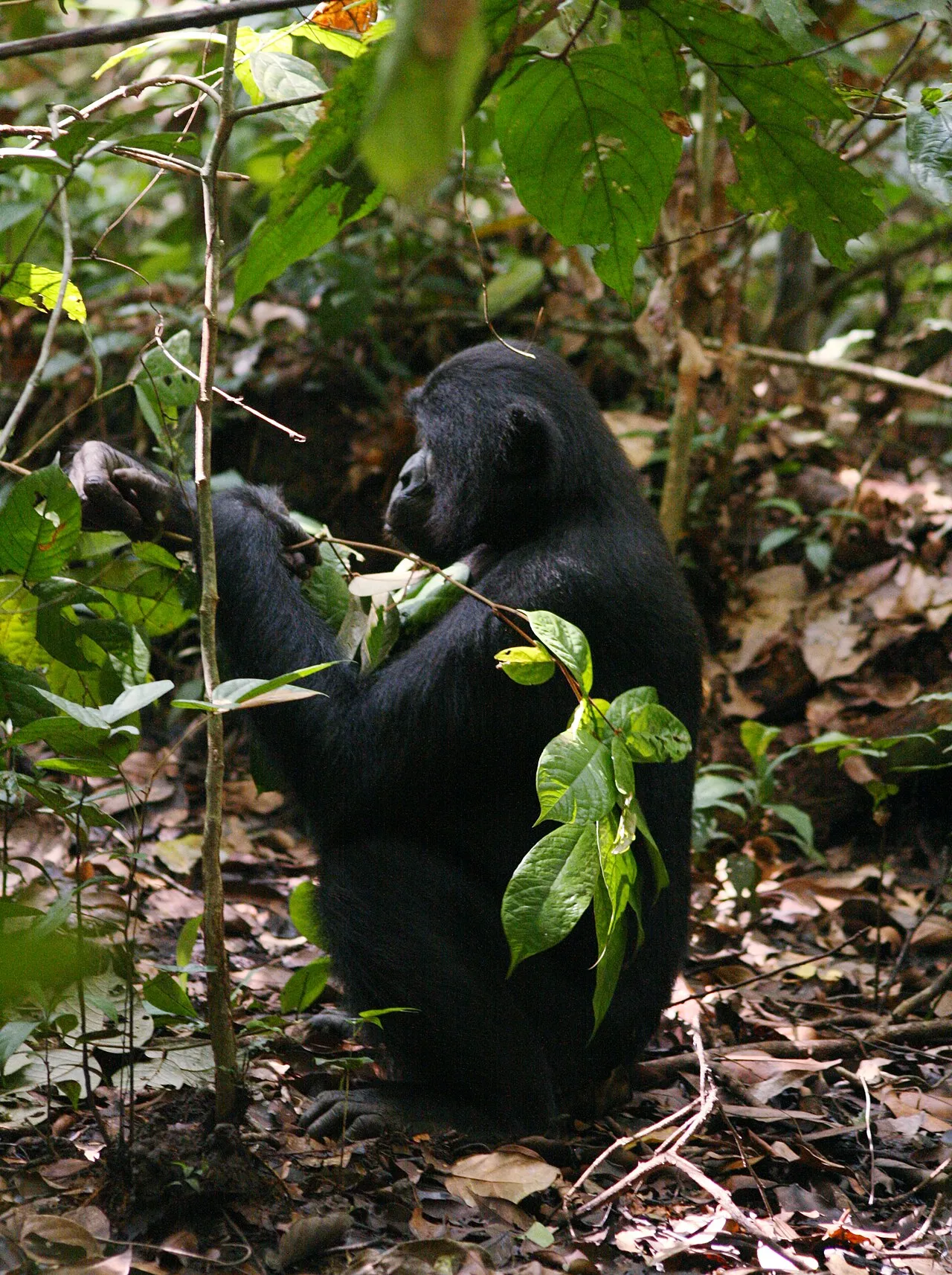
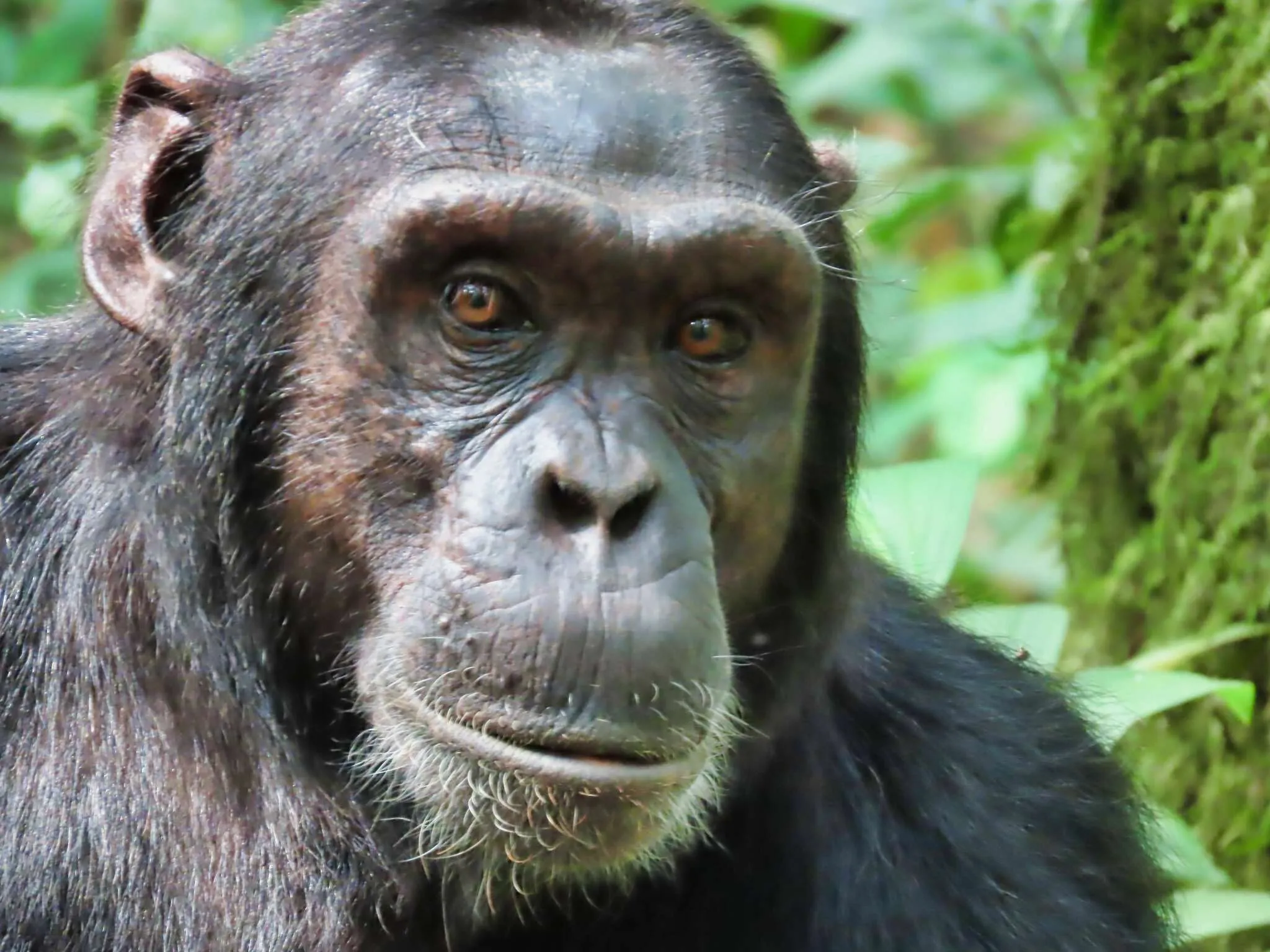
- Chimpanzee (Pan troglodytes): an ape found from Gambia in the west to Uganda in the east. Wild male chimpanzees weigh 34 to 70 kg5, and wild females 26 to 50 kg. Female chimpanzees show very obvious sexual swellings2, while female gorillas show very subtle outward signs of ovulation.