Contents
The western gorilla, Gorilla gorilla, is one of two gorilla species, living in an area of about 709,000 km² across parts of Nigeria, Cameroon, the Central African Republic, Equatorial Guinea, Gabon, the Republic of Congo, Angola and far-western DR Congo. Its dominant adult males, the silverbacks, have striking silver coloration from their shoulders to rump, and in 2003 all of the about 350 gorillas in US zoos1 were western lowland gorillas (Goodall et al. 2003). The species has two subspecies2: the western lowland gorilla, G. g. gorilla, and the Cross River gorilla, G. g. diehli.
What does a western gorilla look like?
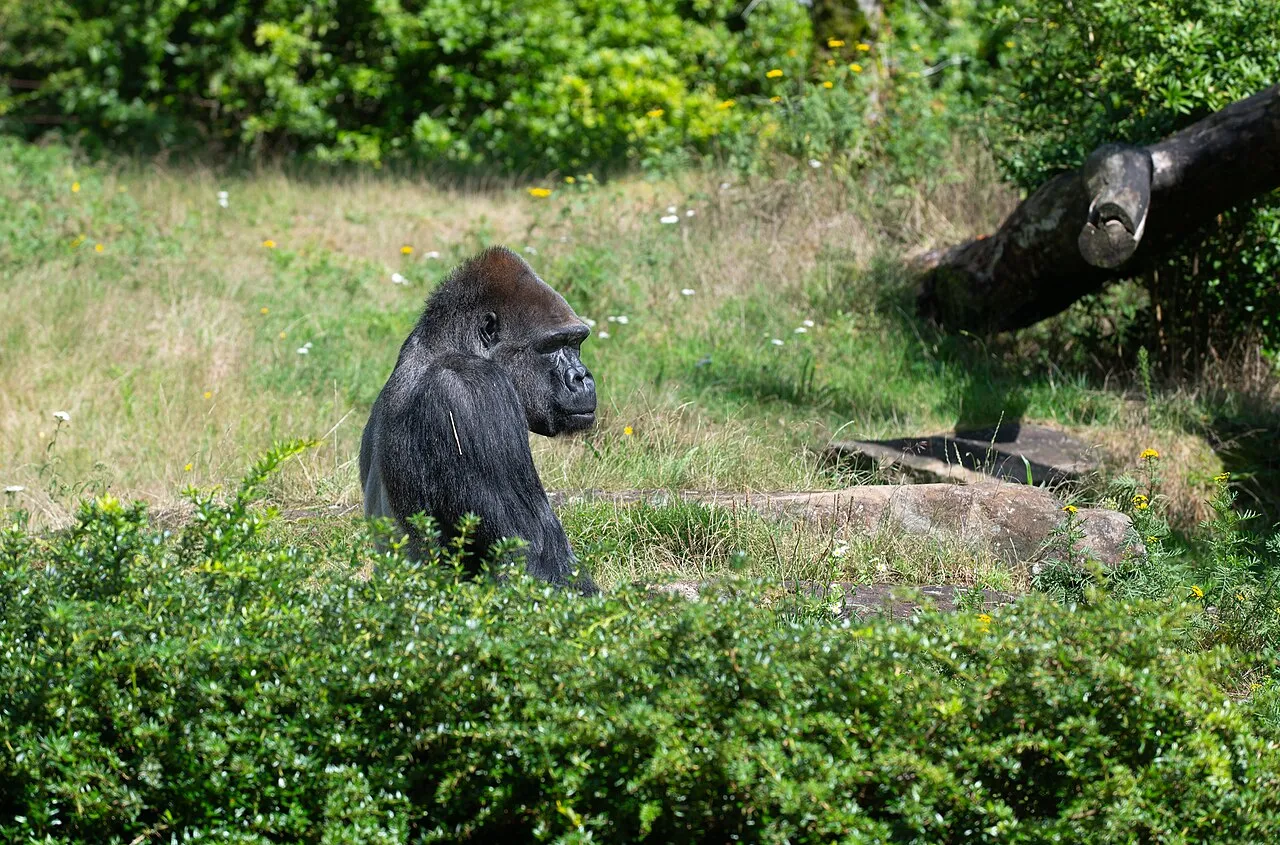
Western gorillas have no tails and jet black skin3. Coarse, dark hair covers the whole body except the face, ears, hands and feet. The face has a short muzzle, a prominent brow ridge, large nostrils and small eyes and ears. Western gorillas have brown, not black, hair on their heads1, and the New England Primate Conservancy describes the crown of the head as often red-brown2.
Size figures differ between sources. Animal Diversity Web says wild males average 180 kg, with females often almost half that weight, and that males reach up to 275 kg in captivity. Primate Info Net, writing about gorillas as a whole, gives males up to 181 kg in the wild and 227 kg in captivity1, with females at 72 to 98 kg, measuring on average 1,700 mm for males and 1,500 mm for females (Rowe 1996). For the western lowland gorilla, the New England Primate Conservancy gives adult males an average of 136 kg and up to 227 kg, and adult females 68 to 113 kg2. Males stand usually 1.75 m with bent knees3, females only 1.25 m on average.
The sexes also differ in shape. In older males the hair on the back and rump generally grows grey and is lost with age3, which is why they are called silverbacks. Males have a larger sagittal crest2, the bony ridge on the skull where the chewing muscles attach, and bigger canine teeth; females are smaller and slimmer.
The main way of moving is quadrupedal knuckle-walking1, although gorillas do climb and spend limited time standing on two legs. Adults climb near the main trunk or on large branches, while juveniles and adolescents are more agile. Females and juveniles climb trees more often2 than heavier males.
Where do western gorillas live?
Gorillas are patchily distributed in east central and equatorial west Africa, the two species separated by the Congo River and its tributaries. The western lowland gorilla occurs in Cameroon south to the Congo River3 and east to the Oubangi River. The Cross River gorilla is found in only a 750 km² area1 in Nigeria and Cameroon, isolated from the rest of the range. The two subspecies are about 250 to 300 km apart2.
Western gorillas live in lowland, swamp, and montane forests from sea level to 1,600 m. Cross River gorillas use low-lying and submontane forests at 150 to 1,600 m. The New England Primate Conservancy places western lowland gorillas in both primary and secondary forest, from sea level to around 2,438 m2, in a hot, humid climate. Animal Diversity Web names tropical secondary forests3, where the open canopy lets much light reach the forest floor, as the best habitat. In mixed swamp forests, western lowland gorillas have one rainy and one dry season a year, with an average rainfall of 1,526 mm1 (Poulsen & Clark 2004).
What do western gorillas eat?
Fruit is widely available but dispersed across the range, and it is a central component of their diet, especially when fruit is abundant. Western lowland gorillas have little dependable access to high-quality terrestrial herbs, but some areas are rich in aquatic herbs, and they do eat herbaceous vegetation. Termites and ants1 are also important staples.
The New England Primate Conservancy sorts the diet into staple, seasonal, and fallback foods. Staples include high-protein herbs, swamp herbs and fruit; when fruit is scarce, gorillas may fall back on bark and low-protein herbs. In the dry season they eat fibrous leaves, stems, bark, roots and unripe fruit, and add insects and their larvae for protein. Adults eat roughly 18 kg of food per day2.
In parts of their range gorillas live alongside chimpanzees, and their dietary overlap in plant food and fruit is great. Even so, competition has not been recorded1 at any of the sites where the two apes overlap (McNeilage 2001).
How do western gorillas live?
Research on the social behaviour of western lowland gorillas has been limited by difficulties with habituation. A group is generally one silverback, several females and their offspring, averaging 8.4 individuals (Parnell 2002), and groups are always observed with fewer than 201 (Yamagiwa et al. 2003). The New England Primate Conservancy gives troops of 5 to 30 individuals, averaging 112. Groups with two silverbacks have been seen at several sites.
Males generally leave their natal group and live alone. Evidence from several sites shows that some males live together without breeding females, usually one adult male with several younger males and non-breeding females. Females move between groups, and when the silverback dies the group breaks up and the females join new groups. As of 2003, infanticide had not been directly observed1 among western lowland gorillas, but it is the probable cause of this behaviour.
Western lowland gorillas are diurnal2: they forage, take a mid-day rest and, in the late afternoon, rebuild their nests to sleep in through the night, on the ground or in trees. They have the largest home ranges and travel the farthest of all gorilla subspecies because they rely on fruit, covering an average of 1,105 m a day1 over a range of seven to 14 km² (Tutin 1996).
Western lowland gorillas have at least 17 vocalizations, split into short- and long-distance calls. Grunts and grumbles make up more than 80% of adult vocalizations. The only long-range call both sexes use, screams aside, is the series of hoots. A silverback facing a threat may stand tall and slap his chest with cupped or flat hands2, not with fists, and may then charge, generally rushing past the intruder instead of hitting it.
How do western gorillas reproduce and how long do they live?
Most of what is known about gorilla reproduction comes from wild mountain gorillas and captive western lowland gorillas, and the subspecies differ little. There is no fixed breeding season3. Gestation lasts 8.5 months (256 days)1, and a single infant is born weighing about 1.8 kg. Infants ride on their mothers’ backs from the age of four months2 through their first two or three years, when they are weaned.
Female western lowland gorillas reach sexual maturity at 8 or 9 years2, males at 11 to 13. Females first give birth at approximately ten years and then at about four-year intervals, but because of high mortality a surviving offspring is produced only once every 6 to 8 years. Males rarely breed before the age of 153.
The New England Primate Conservancy gives wild western lowland gorillas 30 to 40 years and says some in rare, highly managed captive settings have lived over 60 years2. Animal Diversity Web gives wild gorillas 35 to 40 years3, and some captive gorillas almost 50.
Is the western gorilla endangered?
The IUCN lists the western gorilla as Critically Endangered4, and the western lowland gorilla is listed as Critically Endangered (IUCN, 2016)2. Population estimates from around 2001 to 2003 put the western lowland gorilla at as high as 110,0001 and the Cross River gorilla at 250 to 300 (Butynski 2001; Plumptre et al. 2003).
The New England Primate Conservancy names four major threats to the western lowland gorilla: poaching for bushmeat, diseases such as Ebola that spread between humans and animals, habitat degradation and destruction, and climate change. Researchers estimate that Ebola has killed roughly one-third of wild gorillas2, most of them western gorillas. In 2005 Primate Info Net reported that the majority of western gorillas live outside protected areas. Logging roads give hunters access to remote forest, and entire groups can be wiped out1 by a single or a few poachers: the silverback approaches and displays against any perceived threat, including poachers, and is quickly killed.
The western lowland gorilla is listed in CITES Appendix I. Both subspecies are in Class A of the African Convention2 on the Conservation of Nature and Natural Resources, which prohibits hunting, killing, capturing or collecting them. Major parks in the western lowland gorilla’s range include Dzanga-Sangha National Park1 in the Central African Republic and Nouabalé-Ndoki National Park in the Republic of Congo (Tutin & Vedder 2001).
Similar species
- Eastern gorilla (Gorilla beringei): the other gorilla species, living in eastern DRC, Uganda, and Rwanda, about 750 km from western gorillas. Eastern gorillas have longer faces and broader chests1. Western gorillas have a slightly more brown/grey coat3 with shorter hair than mountain gorillas, a subspecies of the eastern gorilla, and are usually slightly smaller.
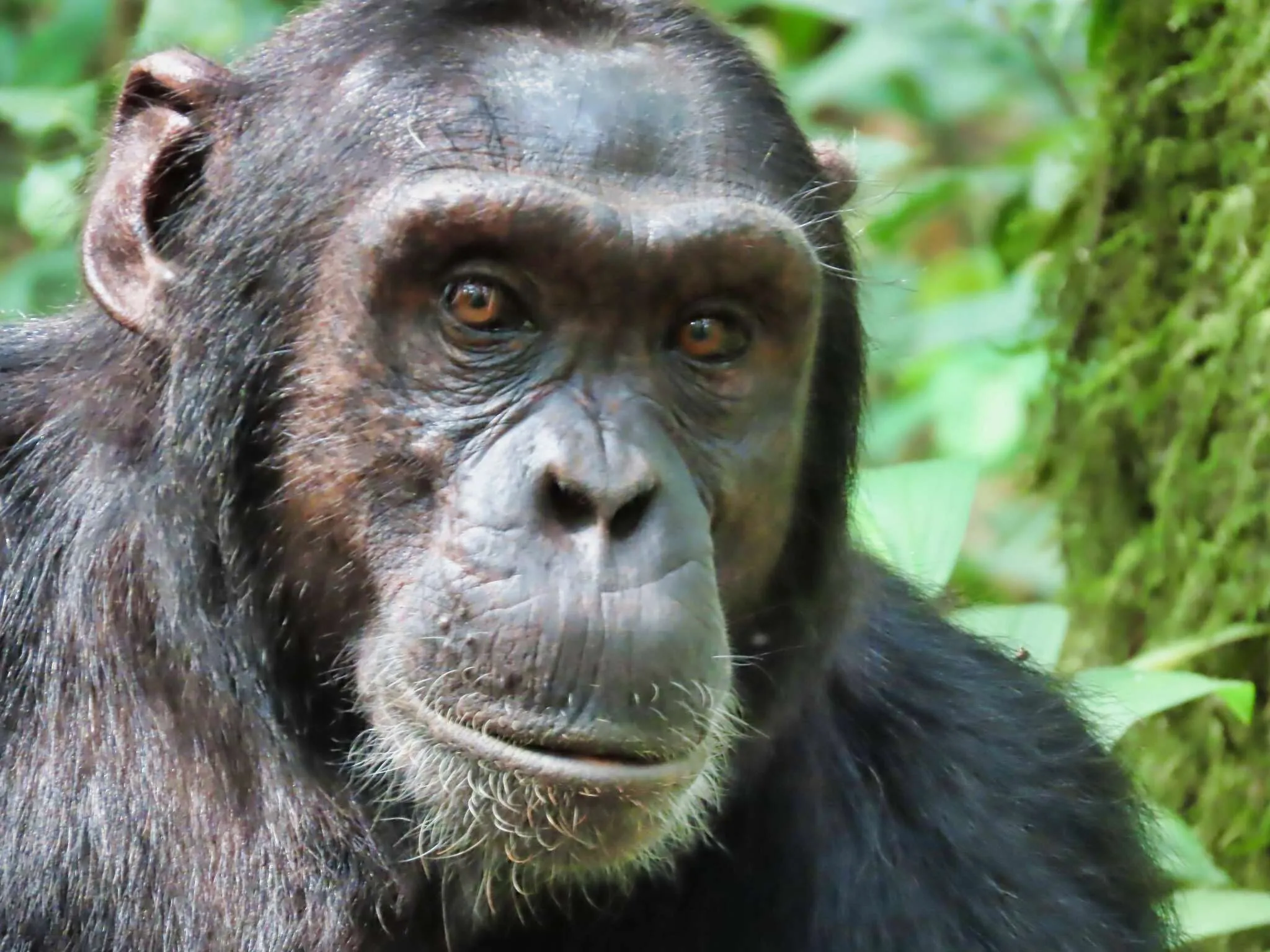
- Chimpanzee (Pan troglodytes): shares parts of the western gorilla’s range, with similar habitat use and overlapping diets. Female gorillas show very subtle outward signs of ovulation1, unlike the very obvious sexual swellings of chimpanzees.